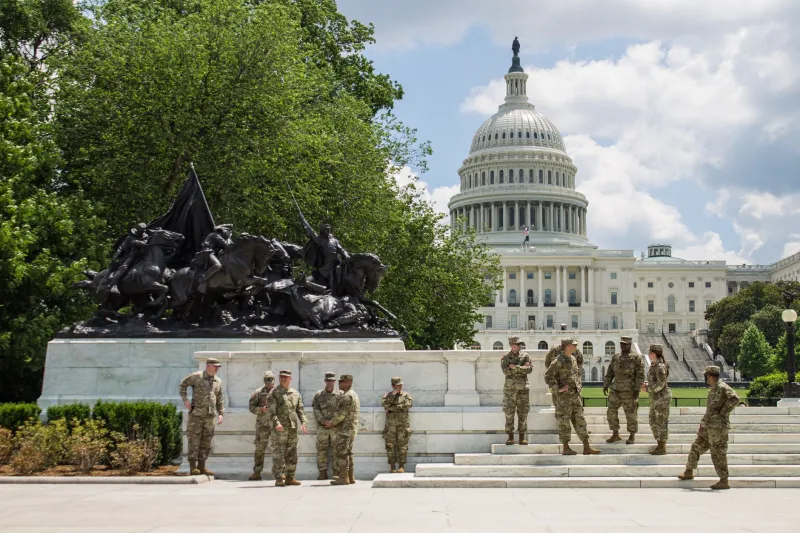
Cleared to Oversee: How Intelligence Veterans Are Neutering the Committees Meant to Watch Them
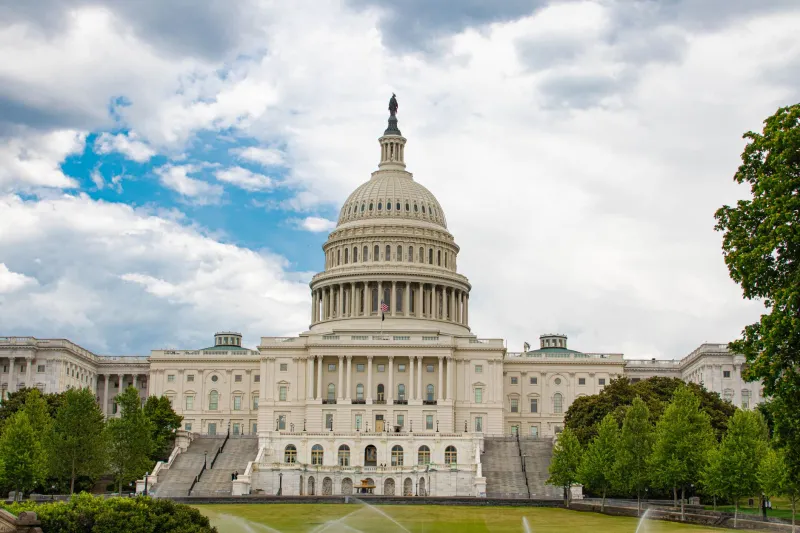
The Senate Select Committee on Intelligence and its House counterpart were created in the aftermath of the Church Committee revelations — a direct legislative response to decades of unchecked domestic surveillance, foreign assassination plots, and institutional contempt for democratic accountability. The architects of those reforms understood that Congress needed members who could ask hard questions of the intelligence community without flinching. What they may not have anticipated was the degree to which the intelligence community would eventually supply its own questioners.
The movement of former intelligence officials into congressional staff positions, committee advisory roles, and the personal offices of members who sit on oversight panels has accelerated measurably over the past two decades. It is a variant of the revolving door phenomenon — familiar enough in defense contracting and financial regulation — but considerably more opaque, because the records that would illuminate it are themselves classified.
The Architecture of Captured Oversight
Congressional oversight of the intelligence community operates through a narrow set of institutional chokepoints. The House Permanent Select Committee on Intelligence and the Senate Select Committee on Intelligence control classified briefings, authorize agency budgets, and nominally review covert action findings. Staff directors, senior investigators, and cleared counsel on those committees wield extraordinary influence over what questions get asked, which documents get requested, and — crucially — which lines of inquiry are quietly abandoned.
Former senior officials from the CIA's Directorate of Operations, the NSA's signals intelligence divisions, and the Defense Intelligence Agency's human intelligence branches have repeatedly cycled into precisely these staff roles. In several documented cases, individuals have moved from senior positions within an agency to senior staff positions on the committee responsible for that agency's budget authorization within a period of twelve to eighteen months. Federal ethics rules that govern the executive branch revolving door do not apply in the same form to congressional employment, creating a structural gap that the intelligence community has proved adept at exploiting.
The consequences are not merely theoretical. Committee staff shape the questions that members — many of whom lack security clearances at the codeword level — are even permitted to ask during classified sessions. A former senior operations officer advising on a covert program review is not a neutral technical resource. That individual carries institutional loyalties, professional networks, and, in some cases, direct personal stakes in the programs under examination.
Budget Fingerprints
The most legible evidence of this dynamic appears not in hearing transcripts — most of which are classified or heavily redacted — but in the National Intelligence Program budget authorizations that the committees produce each year. Researchers who have tracked the unclassified topline figures alongside known personnel movements have identified a consistent pattern: agencies that place former senior officials in committee staff roles during a given Congress tend to receive more favorable treatment in the subsequent authorization cycle, including reduced scrutiny of cost overruns and expanded authorities for programs that had previously drawn skepticism.
This is not corruption in the transactional sense that criminal statutes address. No money changes hands. No explicit agreement is documented. What exists instead is something more durable and more difficult to prosecute: a shared professional culture, a common vocabulary of risk tolerance, and a mutual understanding of which questions it is professionally inadvisable to press too hard. Former intelligence officers do not need to be instructed to protect institutional equities. They have spent careers learning to do exactly that.
The DIA's human intelligence programs, several of which have faced persistent questions about effectiveness and legal compliance, offer a particularly instructive case. Over a ten-year period, the committee staff responsible for DIA oversight included multiple former DIA officials at the senior executive service level. During that same period, documented requests for independent inspector general reviews of specific DIA programs were either declined or substantially narrowed in scope before any findings were produced.
The Clearance as Currency
Underlying this entire system is the security clearance — specifically, the codeword-level access that only a small number of congressional staff hold at any given time. These clearances are extraordinarily difficult to obtain from scratch and extraordinarily easy to transfer for someone who already holds them from prior government service. The practical effect is that committees are heavily incentivized to hire former intelligence officials simply because they can be read into sensitive programs immediately, while a congressional investigator without a prior intelligence background might wait years for equivalent access.
This creates a hiring pipeline that is self-reinforcing by design. The more dependent committees become on cleared former officials, the more those officials shape the institutional culture of the committee, the more the committee's oversight reflects the priorities and blind spots of the community it is supposed to police, and the more the next generation of committee staff is drawn from the same pool. The Church Committee's institutional memory fades. The oversight function does not disappear — it is simply reabsorbed.
What the Archive Reveals
Declassified Church Committee records, available through the National Archives, are instructive not for what they document about the 1970s intelligence community but for the contrast they provide with contemporary practice. The Church Committee employed investigators who were explicitly adversarial toward the agencies they examined. Staff director William Miller came from the Foreign Service, not from Langley. The investigators who surfaced COINTELPRO abuses and CIA assassination planning were not former CIA officers.
The contrast with current committee staffing is stark. Public disclosures, lobbying registration records, and the limited personnel information that does enter the public domain through financial disclosure requirements paint a picture of committees that increasingly resemble the agencies they oversee — in personnel, in institutional culture, and in their apparent comfort with the proposition that certain questions are better left unasked.
Reform proposals have circulated in good-government circles for years. A mandatory cooling-off period of at least three years before former intelligence officials could serve in oversight staff roles would break the most direct pipeline. Expanded use of cleared independent inspectors general with genuine subpoena authority and public reporting mandates would reduce committee dependence on internally socialized staff. Broader declassification of committee authorization reports — a practice that several allied democracies employ without apparent damage to national security — would at minimum allow outside researchers to identify the fingerprints of captured oversight after the fact.
None of these reforms has advanced. The committees that would need to enact them are staffed, in significant part, by the people who would be most constrained by their passage.
The Accountability Gap
What makes this particular variant of the revolving door especially consequential is the invisibility it is guaranteed by classification. The financial sector's capture of its regulatory apparatus can be traced through public comment letters, rulemaking dockets, and enforcement records. The intelligence community's management of its congressional overseers happens in rooms with no windows, in documents that may not be reviewed for decades, and through conversations that leave no discoverable record at all.
The Radical Database will continue tracking personnel movements, budget authorization patterns, and the thin documentary record that does reach the public domain. The archive is incomplete by design. That is precisely why it demands to be built.