Justice in the Dark: How Mandatory Arbitration Clauses Buried the Public Record of Corporate Wrongdoing
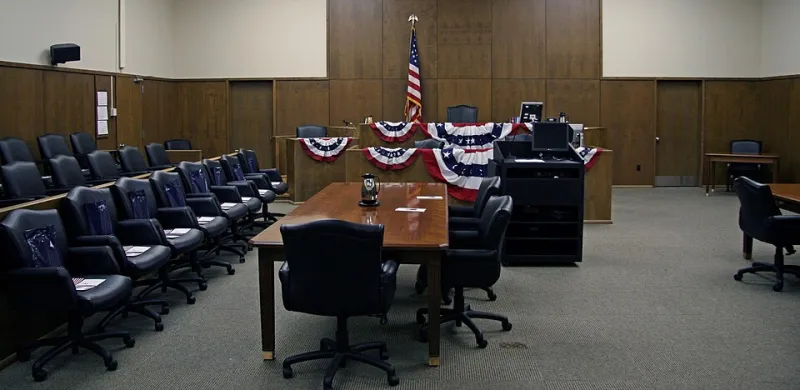
There is a courthouse that most Americans will never enter — not because they lack standing, but because they signed away their right to do so. It exists in the fine print of a cell phone contract, in the onboarding paperwork of a new job, in the admissions documents of a long-term care facility. It operates without juries, without published opinions, and without any meaningful obligation to disclose its outcomes to the public. It is the private arbitration system, and over the past three decades it has become one of the most consequential — and least examined — instruments of corporate power in the United States.
The Radical Database has reviewed decades of congressional testimony, Federal Arbitration Act litigation records, consumer advocacy research, and the limited disclosure data that arbitration providers are legally required to publish. What those materials reveal is not merely a procedural inconvenience for aggrieved consumers. They reveal the systematic dismantling of the public legal record — the evidentiary infrastructure through which a democratic society tracks, names, and holds accountable those who cause harm at scale.
The Architecture of Concealment
The legal foundation for mandatory arbitration as a corporate tool was not inevitable. The Federal Arbitration Act of 1925 was designed to resolve commercial disputes between businesses of roughly comparable sophistication and bargaining power. Its application to consumer and employment contracts — where power asymmetry is the defining characteristic — was the product of deliberate judicial interpretation, most consequentially in a series of Supreme Court decisions stretching from the 1980s through the 2010s that progressively expanded arbitration's reach while limiting courts' ability to scrutinize the fairness of arbitration agreements.
By the time the Consumer Financial Protection Bureau published its landmark 2017 study on arbitration in financial products, the transformation was nearly complete. The study found that tens of millions of Americans were subject to mandatory arbitration clauses in their consumer financial contracts alone. Credit cards, bank accounts, payday loans, prepaid cards — the instruments of everyday economic life had become vectors for jurisdictional elimination.
What the CFPB study also documented, and what received considerably less attention, was the implications for the public record. When a lawsuit is filed in federal or state court, it generates documentation: complaints, motions, judicial orders, and — when cases are resolved — either verdicts or, in the case of settlements, dismissal records. This paper trail is imperfect and unevenly accessible, but it exists. It can be searched, aggregated, analyzed, and published. It is the raw material from which investigative journalists, plaintiff attorneys, and regulatory agencies construct the evidentiary case against systematic wrongdoing.
Arbitration produces no such trail. Proceedings are confidential by design. Awards are rarely published. The identities of claimants, the nature of their grievances, and the outcomes of their cases vanish into the administrative records of private arbitration firms — records that are, in most instances, shielded from public disclosure.
The Repeat Player Advantage
Among the most extensively documented consequences of this opacity is what legal scholars have termed the "repeat player advantage." Because corporations participate in arbitration proceedings far more frequently than individual claimants, they accumulate institutional knowledge of arbitrators' tendencies, develop relationships within arbitration provider networks, and are positioned to select procedural frameworks that systematically favor their interests. Individual claimants, appearing in this forum once and often without counsel, possess none of these advantages.
The data that arbitration providers are required by California law to disclose — one of the few meaningful transparency mandates in this domain — offers a partial but revealing window into this dynamic. Analyses of disclosed arbitration outcomes have consistently found that corporations prevail at substantially higher rates than they do in comparable civil litigation, and that the disparity widens in cases involving the same corporate party appearing repeatedly before the same arbitrators.
This is not merely a fairness concern for individual claimants, though it is emphatically that. It is a structural problem for accountability. A corporation that loses a public jury verdict in a products liability case faces not only the immediate financial consequence but the reputational and regulatory exposure that a published judicial record creates. A corporation that quietly settles or defeats thousands of arbitration claims involving the same defective product or predatory practice faces none of those downstream consequences. The pattern is invisible because the record does not exist.
What the Archive Reveals — and What It Cannot
One of the most significant analytical challenges posed by mandatory arbitration is precisely this archival void. Historians, journalists, and researchers working to document corporate misconduct depend on the existence of discoverable records. The tobacco litigation of the 1990s produced millions of internal documents through the discovery process that have since become foundational to public health research and advocacy. The opioid litigation of the 2010s generated a comparable archive. These records exist because the cases were litigated in public courts where discovery obligations applied.
Arbitration's confidentiality provisions frequently extend to discovery materials as well. Evidence developed in the course of an arbitration proceeding — internal corporate communications, safety studies, personnel records — may be contractually prohibited from disclosure even after the proceeding concludes. The practical effect is that the evidentiary foundation for understanding a corporation's internal knowledge of its own wrongdoing is not merely sealed; it is, for purposes of the broader public record, effectively destroyed.
Researchers at the Economic Policy Institute and the National Consumer Law Center have separately estimated the scale of disputes that have been diverted from public courts into private arbitration since the early 1990s. The numbers are staggering in their implications. Millions of potential claims — involving financial fraud, workplace discrimination, consumer product defects, and nursing home neglect — have been processed through a system whose outputs are structurally inaccessible to the public interest.
The Legislative Response — and Its Limits
Congress has intermittently attempted to address specific applications of mandatory arbitration. The Dodd-Frank Act of 2010 restricted arbitration clauses in certain mortgage contracts. The Military Lending Act provides some protections for servicemembers. Most significantly, the Ending Forced Arbitration of Sexual Assault and Sexual Harassment Act, signed into law in 2022, eliminated mandatory pre-dispute arbitration for claims in that category — a meaningful reform that nonetheless left the vast majority of consumer and employment arbitration undisturbed.
The CFPB's 2017 rule, which would have restricted the use of class action waivers in consumer financial arbitration agreements, was overturned by Congress within months of its finalization. The reversal was achieved through the Congressional Review Act, a procedural mechanism that also prohibits the agency from issuing a substantially similar rule in the future. The message to regulatory agencies contemplating arbitration reform was explicit.
Accountability Without a Record
The displacement of public litigation by private arbitration represents something more than a consumer protection problem. It represents a fundamental alteration of the informational ecology through which democratic accountability functions. Courts, whatever their limitations, are public institutions whose proceedings generate public records. Those records are the substrate of investigative journalism, regulatory enforcement, legislative reform, and historical understanding.
When that substrate is systematically eliminated — not through suppression in the conventional sense, but through the contractual privatization of dispute resolution — the capacity for accountability does not merely diminish. It is architecturally foreclosed. The wrongdoing continues. The settlements accumulate. The pattern remains invisible. And the corporations that benefit from that invisibility continue drafting the next generation of fine print.
The radical act, in this context, is simply to name what has been lost — and to insist that the public record is not a bureaucratic artifact but a democratic necessity.