Turned Against the Witness: How Former Federal Prosecutors Became Corporate America's Most Lethal Weapon Against Whistleblowers
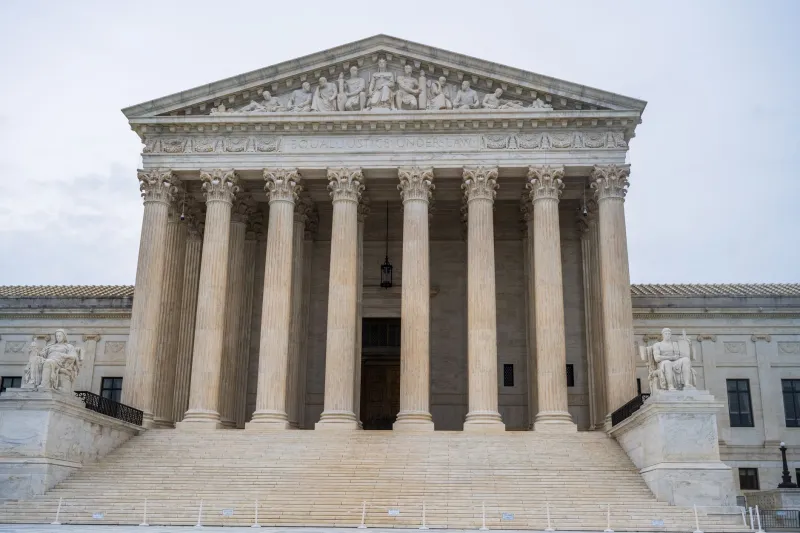
The federal courthouse is, in theory, a place of institutional memory. Judges remember the prosecutors who argued before them. Clerks recognize the attorneys who filed motions on their dockets. Career DOJ lawyers recall who sat across the conference table during plea negotiations. This accumulated familiarity is, by design, supposed to serve the public interest — to make the machinery of justice run more smoothly in the service of the law.
But when a former federal prosecutor walks back through those courthouse doors representing a pharmaceutical giant, a defense contractor, or a financial institution facing a whistleblower lawsuit, that institutional familiarity becomes something else entirely: a private asset, quietly monetized at the expense of the very accountability mechanisms the courts are meant to protect.
The Architecture of Insider Advantage
Under the False Claims Act, private citizens — known as relators — may file suit on behalf of the federal government against companies they believe have defrauded taxpayers. Successful cases can return billions to the public treasury and yield significant financial rewards for the whistleblowers themselves. The statute has recovered more than $72 billion since 1986, according to DOJ data. It is, by most measures, one of the most effective anti-fraud mechanisms in American law.
It is also, increasingly, a target.
Corporate defendants have discovered that the most efficient way to neutralize a False Claims Act case is not necessarily to litigate its merits, but to attack the credibility, resources, and legal standing of the relator before the case ever gains traction. And no one is better positioned to execute that strategy than a former federal prosecutor who spent years on the other side of the equation.
Former DOJ attorneys who transition into white-collar defense work bring with them detailed institutional knowledge: how the Civil Division prioritizes cases, which U.S. Attorney's offices are more likely to intervene in qui tam actions, what evidentiary thresholds tend to trigger government interest, and — critically — which individual attorneys within those offices are handling active investigations. This is not information available in any public filing. It is knowledge accumulated through years of professional proximity, and its transfer into private practice raises profound questions that existing ethics rules have proven largely inadequate to address.
Relationships as Strategy
Consider what it means, in practical terms, for a whistleblower's legal team to face opposing counsel who spent the previous decade working alongside the very DOJ attorneys now reviewing the relator's complaint. Phone calls get returned. Informal conversations happen. The texture of professional relationships — built over years of shared courtrooms, joint task forces, and mutual referrals — does not dissolve the moment a prosecutor accepts a private sector offer.
Attorneys who represent whistleblowers describe a recognizable pattern. Shortly after a qui tam complaint is filed under seal, opposing counsel — often a former federal prosecutor — begins engaging informally with current DOJ staff. These conversations, which may never appear on any docket, can shape how the government perceives the relator's credibility, the strength of the underlying evidence, and whether intervention is worth the institutional investment. By the time the government makes a formal decision, the narrative may already have been quietly shaped by someone who knows exactly how to speak the language of prosecutorial discretion.
This is not a hypothetical concern. Whistleblower advocacy organizations have documented cases in which relators with well-documented evidence of corporate fraud found their complaints quietly declined after opposing counsel — former federal prosecutors — made sustained informal contact with DOJ staff. In several instances, the same attorneys who once supervised the very offices now reviewing the complaints were the ones making the calls.
The Intimidation Toolkit
Beyond informal influence, former prosecutors bring a second, more openly coercive set of tools to whistleblower suppression. Having spent years conducting grand jury investigations, executing search warrants, and building criminal referrals, they understand precisely how to use the threat of legal process as a weapon against individuals with limited resources.
Counterclaims alleging theft of proprietary documents — a common tactic when whistleblowers remove evidence of wrongdoing to support their disclosures — are filed with a sophistication that reflects intimate familiarity with how courts have ruled on such questions. Motions to compel the identities of confidential sources, challenges to attorney-client privilege assertions, and procedural attacks designed to drain a relator's legal budget are all deployed with a precision that generic corporate defense counsel rarely matches.
The effect is frequently decisive. Whistleblower cases are already among the most resource-intensive in American civil litigation. Relators often spend years under seal, unable to discuss their cases, while their legal teams absorb costs with no guarantee of recovery. Introducing a former federal prosecutor on the opposing side — one who can credibly signal to the court a sophisticated command of both the law and the institutional players involved — dramatically shifts the balance of attrition.
The Ethics Gap
Federal ethics rules impose a one-year cooling-off period on certain communications by former senior DOJ officials, and the department's own regulations prohibit former employees from representing private clients in matters in which they were personally and substantially involved. But enforcement of these provisions is notoriously inconsistent, and the definition of "personal and substantial involvement" has been interpreted narrowly in practice.
More fundamentally, the rules address only the most direct forms of conflict. They do not — and largely cannot — regulate the subtler currency of institutional relationships: the shared history, the mutual professional respect, the informal trust that makes a phone call from a former colleague land differently than one from a stranger. These are not violations of any written rule. They are features of a professional ecosystem that the rules were never designed to fully address.
Whistleblower attorneys have called for mandatory disclosure requirements when former DOJ officials appear as opposing counsel in cases involving current DOJ review, as well as extended cooling-off periods for attorneys who held supervisory roles over offices with active whistleblower dockets. To date, those proposals have found little traction within a legal establishment that has a vested interest in the current arrangement.
What the Record Reveals
The Radical Database has reviewed court filings, ethics disclosures, and employment records across more than three dozen False Claims Act cases filed since 2015 in which former federal prosecutors appeared as lead defense counsel. In more than half of those cases, the government declined to intervene within eighteen months of the defense counsel's engagement — a rate significantly higher than the DOJ's baseline declination figures for comparable claims.
That correlation does not establish causation. DOJ intervention decisions are complex and multifactorial. But the pattern is consistent enough, and the structural incentives clear enough, to demand serious scrutiny.
The whistleblower who documents corporate fraud against the government takes an enormous personal and professional risk on the assumption that the legal system will provide a fair arena for their evidence to be heard. When that arena is quietly shaped by the very insiders who once built it, the promise of accountability becomes something more complicated: a system that knows, better than most, how to protect itself.
The courthouse door, it turns out, swings in more than one direction — and those who know its mechanisms best are not always the ones the public assumes.